✕

Coming soon,you can add customer service first
✕

Column: industry Tag: NGTs,EU,plants Published: 2025-12-05 16:53 Source: www.foodingredientsfirst.com Author: Gaynor Selby
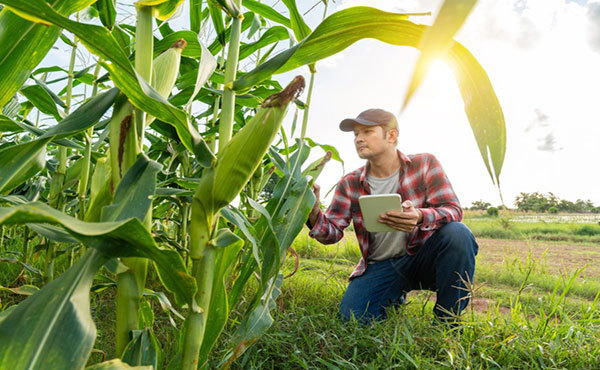
A provisional deal has been struck in Brussels that revises rules concerning new genomic techniques (NGTs), which the European Council and Parliament say will enhance the sustainability and competitiveness of food systems, as well as reduce external dependencies.
But there have been mixed reactions to the provisional agreement, with many agreeing it gives EU farmers better access to seeds and innovation, while others see this as the EU agreeing to ease regulations of a new generation of gene-edited crops.
Negotiators reached a provisional agreement yesterday, which paves the way for revised rules that are expected to be agreed into law.
According to the EU, the deal is all about simplifying the process for NGT plants equivalent to conventional plants, and comes in response to concerns from stakeholders in the agri-food industry about intellectual property and access to seeds.
Historically, NGTs have been regulated like genetically modified organisms (GMOs), which involve inserting DNA from a different species.
Using NGTs improves plant varieties and speeds up the way they are developed. The term encompasses a range of techniques that modify seeds to incorporate specific features, such as disease resistance, climate change resilience, and reduced reliance on fertilizers and pesticides.
But this is done “in a way that can also occur in nature or through conventional breeding techniques.”
What does the provisional deal outline?
One of the key points of the provisional agreement is the difference between Category 1 NGT plants and Category 2 NGT plants.
During yesterday’s discussions, the EU Council and Presidency agreed to uphold that NGT-1 plants are equivalent to conventional plants.
The new deal says that NGT-1 plants and products will not be labeled, except for seeds and other plant reproductive material of NGT-1 plants, which should be labeled.
The agreement also includes a list of traits that should be excluded from the NGT-1 category, including the development of tolerance to herbicides and the “production of a known insecticidal substance.” This change would mean that these sorts of plants would instead be classified as NGT-2 and would require authorization, traceability, and monitoring.
Category 2 NGT plants tend to have fewer “natural-equivalent” genomic modifications and, therefore, are subject to GMO legislation requirements. This includes mandatory labeling of products.
The new deal pushes for tighter rules concerning exactly what is labeled to ensure consumers receive the correct information.
The Council and Parliament agreed to allow EU countries to opt out of cultivating NGT-2 plants within their borders and enforce their own rules on this matter.
Another point of the provisional deal — which will now have to be endorsed by the Council and the Parliament before it can be formally adopted — addresses increasing concerns from plant breeders and farmers on patenting.
Many EU farmers have lost revenue after certain crop yields were battered by extreme weather events, including drought, high temperatures, and heavy rainfall.
The Council and the Parliament want a patenting expert group, focusing on the effect of patents on NGT plants, to be formed. This would include experts from EU countries, the European Patent Office, and the Community Plant Variety Office.
Another point in the deal is that companies and breeders must submit information to a publicly available database highlighting all existing or pending patents.
The commission also plans to publish a study examining the impact of patenting on innovation, seed availability, and the competitiveness of the EU plant breeding sector. Any further issues of concern that come from this study will then be addressed.
Industry stakeholders react
Copa Cogeca, which represents European farmers and agricultural cooperatives, says this deal enables responsible access to advanced plant-breeding methods, accelerating the development of improved plant varieties and providing farmers with better access to crops that can withstand the effects of drought and extreme heat.
“This agreement marks a turning point for European agriculture. NGTs provide real and tangible tools to tackle the current and future challenges in climate, environment, and food security that the EU faces. It addresses the urgent need for solutions to help farmers adapt to rapidly changing conditions,” says Thor Gunnar Kofoed, chairman of the Copa and Cogeca Working Party on Seeds.
Think tank Farm Europe also welcomes the provisional agreement. The organization wants to see an EU framework based on shared scientific criteria that will reduce the confusion between NGTs and traditional GMOs, which has long fuelled public mistrust.
“The distinction between NGT1 and NGT2 will facilitate market access to innovative seeds. The modifications that can occur in nature will be operated more effectively and more quickly than conventional breeding practices. This will help overcome some challenges EU agriculture is confronted with, like water resilience, climate change, or increased pressure from pests and diseases,” says Copa Cogeca.
Softening of existing NGT rules?
However, IFOAM Organics Europe has a different take.
“The provisional agreement is a striking testimony to the continuous pressure to force a conclusion on the NGT proposal as soon as possible and at any cost.”
“The stakes of these negotiations are high: largely on the basis of hypothetical promises about the potential sustainability of NGTs, the future of European breeding, farming, and food is being put at risk, as well as consumers’ freedom of choice and right to know what is in their food based on clear labeling provisions,” says Jan Plagge, president of IFOAM Organics Europe.
“This trilogue agreement includes no effective provision to limit the scope of patents and protect the freedom to operate of traditional European breeders. Without an effective legal solution, the EU risks hindering real innovation in plant breeding, rather than promoting it.”
Meanwhile, Friends of the Earth Europe condemns yesterday’s talks in Brussels as an “early Christmas gift to big biotech.”
“The agreement scraps safety checks, removes labeling and strips people of the right to choose, while letting big corporations cash in through patents,” says Mute Schimpf, food campaigner at Friends of the Earth Europe.
He stresses that new GMOs will no longer be subject to either the EU Environmental Liability Directive or national liability schemes applicable to growers of GM crops, if this agreement turns into law.
Hot key words
Hot Products
Popular Vendors

Discover the latest industry trends
Buyers/Suppliers




Sinoexpo Digital Platform







 沪公网安备31010402000543号